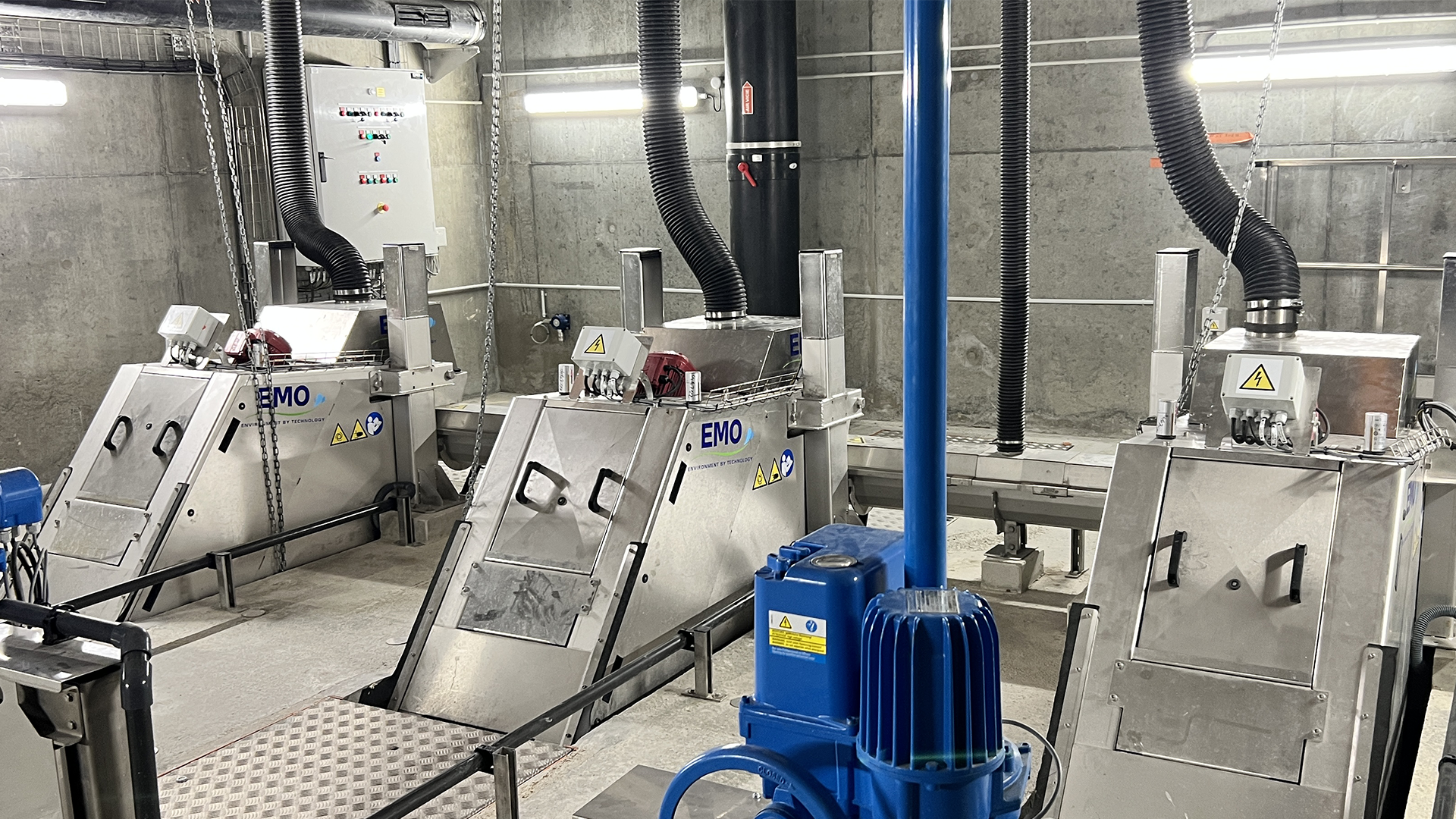
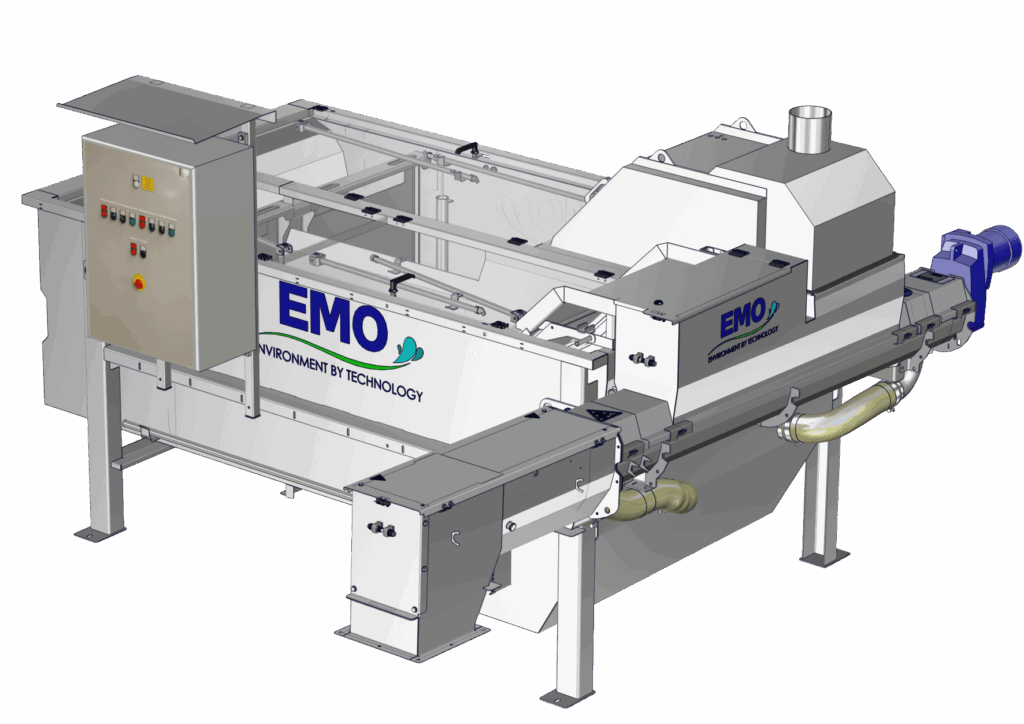
The DE step-type fine screen helps to protect the WWTP by trapping waste such as wipes, rags, textiles, paper, plastics and fibrous materials, and to reduce the pollution load of the water to be treated.
There are many areas of application:
- urban wastewater treatment plants
- industrial wastewater treatment plants (food processing, paper mills, tannery, slaughter house, etc.).
Three designs and versions are available:
- for HIGH flow rates
- for HIGH and LOW water levels
- for HEAVY industrial effluents

EMO step-type fine screen in a tank
ADVANTAGES

- Channel or casing configurations (depending on existing constraints)
- Robust frame
- Tilting equipment for easy maintenance
- No wash water required (clogging operation)
- Anti-blocking device
- High capture rate
- Screening mesh from 1 to 6 mm
OPERATING PRINCIPLE
The DE step-type fine screen is made up of 2 sets of blades: one set of fixed blades and another set of mobile blades.
The screen works at clogging.
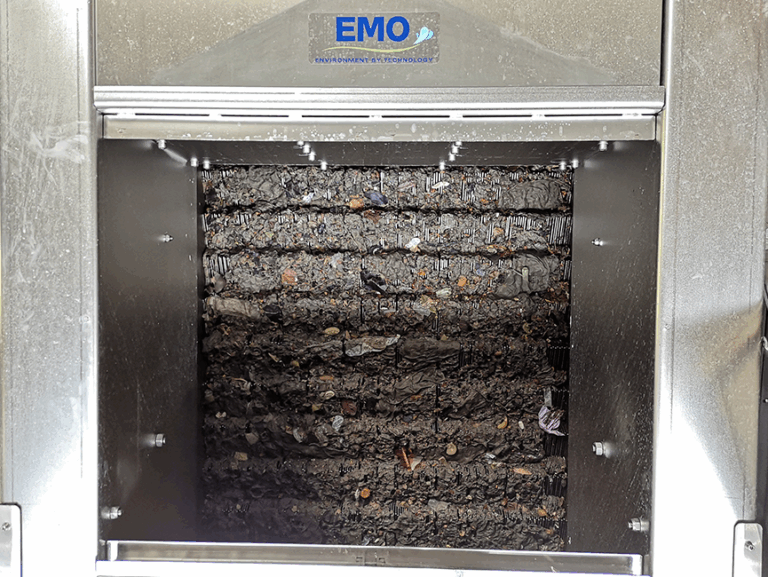
The fixed and moving blades are aligned. The waste forms a mat on the blade field.
Accumulated waste increases filtration ratio. This accumulation clogs the bar screen. The upstream water level rises, triggering the bar screen to operate.
This allows the waste to be lifted by the rotating movement of the mobile blades. Once the upstream water level has dropped, the bar screen stops.
RANGE and OPTIONS
The principle is simple: keep the field of blades clogged like an additional filter, giving a 60-80% rate of material capture depending on the spacing of the blades, the nature of the water being treated and its material load.
FOR HIGH FLOW RATES
- Discharge height*: 1030 to 4700 mm
- Channel width: 400 to 2000 mm
FOR HIGH OR LOW WATER LEVELS
- Discharge height *: 900 to 4340 mm
- Channel width: 400 to 2000 mm
FOR HEAVY INDUSTRIAL EFFLUENTS
- Channel height *: 640 to 4450 mm
- Channel width: 300 to 2000 mm
* special manufacture upon request